
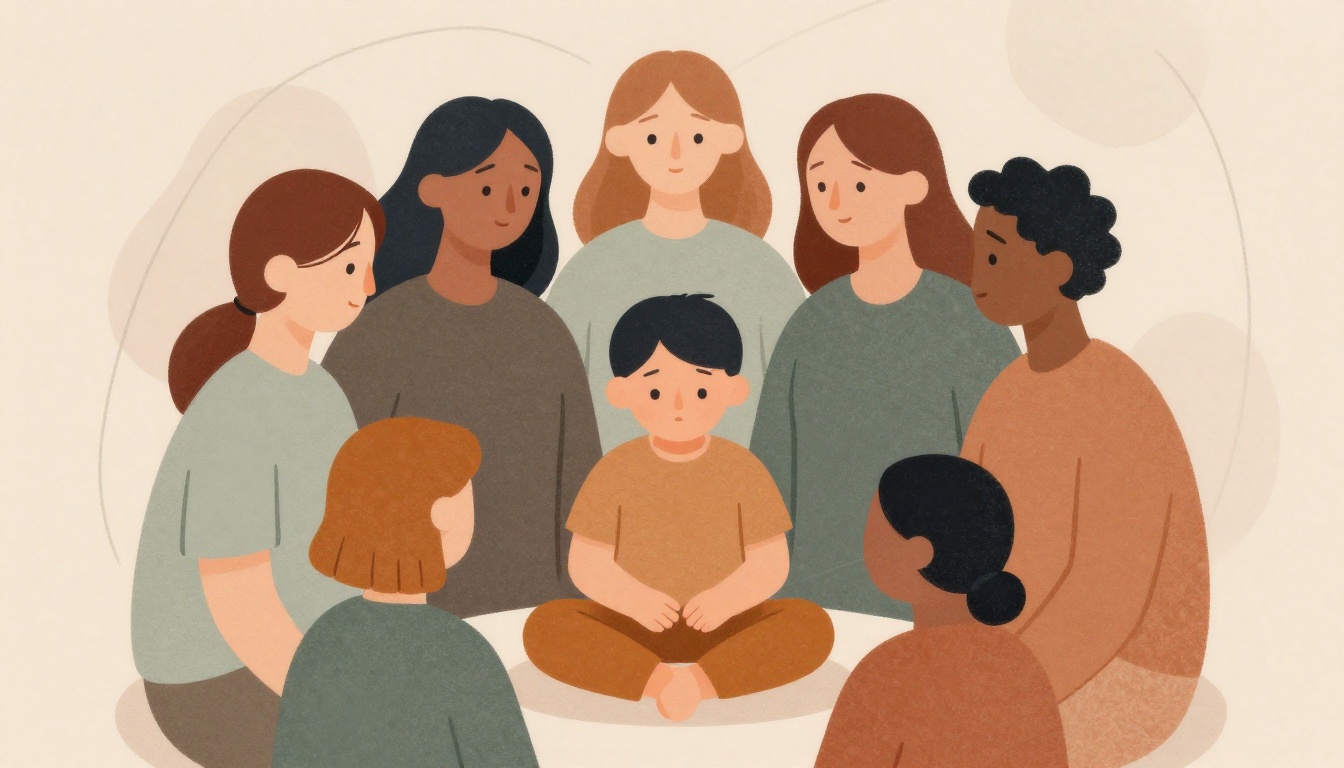
New parenthood can feel isolating, and the practical question is usually the same: who can I actually call, and where do I find them? Building a support network is not about collecting contacts — it is about matching your specific needs to the right kind of help, then making the first contact. Research on peer support in the perinatal period shows measurable benefits, so this is worth doing deliberately rather than hoping it happens.
According to the 2025 randomized controlled trial of the Mom Supports Mom peer support intervention, what was the primary outcome measured at week six after delivery?
Select one answer.
Start by naming what you need
Support comes in three forms, and most new parents need all three:
- Emotional support — someone who listens without fixing. Peer support groups are built for this.
- Practical support — meals, childcare, a ride to an appointment. Friends, family, and community programs cover this.
- Informational support — answers about feeding, sleep, development, or your own mental health.
Write down one need in each column before you start searching. It keeps you from joining five groups that all do the same thing.
Peer support groups: the evidence-backed starting point
Peer support is non-clinical: people with shared experiences offer and receive encouragement from one another, without diagnosis or a therapy model. A 2025 randomized controlled trial of a remote peer support intervention, Mom Supports Mom, found that the intervention was associated with decreased depressive symptoms (Cohen's d = 0.30, p = .003) and anxiety symptoms (d = 0.29, p = .003) at six weeks after birth, plus an increase in health-related quality of life (d = 0.27, p = .008) compared with a control group (Psychosocial Intervention).
A Scottish government evidence review of peer support in perinatal mental health found generally positive effects, with some mixed outcomes, and noted that participants suggested peer support could reduce stigma by increasing knowledge of postnatal depression symptoms (gov.scot).
What this means practically: peer groups are a low-intensity, scalable option that works best for mild distress — and they are not a substitute for clinical care if symptoms are severe.
Family Resource Centers and Parent Centers
Two underused categories of local infrastructure are worth knowing by name.
Family Resource Centers (FRCs) are community-based or school-based hubs of services designed to strengthen families. They are known by many names — Family Centers, Family Success Centers, Family Support Centers, Parent Child Centers — and there are more than 3,000 of them nationwide, typically offered at no or low cost and developed to reflect the specific needs and cultures of the communities they serve (National Family Support Network).
Parent Centers include nearly 100 Parent Training and Information Centers (PTIs) and Community Parent Resource Centers (CPRCs) across the US and territories, working with families of infants, toddlers, children, and youth with disabilities from birth to 26 (Center for Parent Information and Resources). If your child has a developmental concern or diagnosis, this is a free, structured place to start.
A step-by-step plan you can run this week
- List your three needs (emotional, practical, informational) in one sentence each.
- Search your state's family support network and your local FRC directory. Call one and ask what they offer new parents.
- Find one peer support group — in person or online — and attend once before deciding whether it fits.
- Check your state's parent center if you have any developmental or disability-related questions.
- Assign one practical task to one person in your life. Be specific: "Can you bring dinner Thursday?" works better than "let me know if you need anything."
- Set a two-week check-in with yourself. If mood or anxiety is worsening, escalate to a clinician rather than adding more peer groups.
What to look for in a group
- A clear facilitator role, even if the facilitator is a peer rather than a clinician.
- Stated scope: peer support is non-clinical and does not involve diagnosing.
- A group that matches your stage — pregnancy, postpartum, loss, or parenting after loss.
- Free or low-cost access, since cost should not be the barrier.
When peer support is not enough
Peer support is one piece of the puzzle, not the whole picture. If you are experiencing persistent low mood, intrusive thoughts, or anxiety that interferes with daily functioning, contact a healthcare provider. Peer groups complement clinical care; they do not replace it.
How the Featured Expert Can Help
MGC Wellness Services is a small, whole-person wellness practice focused on mental health education, maternal nutrition, and community-based initiatives. The founder, Grazia, offers prevention-focused services in English and Spanish, supporting individuals, families, and community organizations. You can learn more at mgcwellness.com.
Quick quiz
Test what you just read before you start reaching out.